



During meetings with lawmakers, Congress urged to reauthorize Farm Bill, make more rural Californians eligible for home loans in 2026
Because few members of Congress have personal connections to agriculture, it’s important that the ag community continue to meet with lawmakers to keep them informed of farmers’ needs.
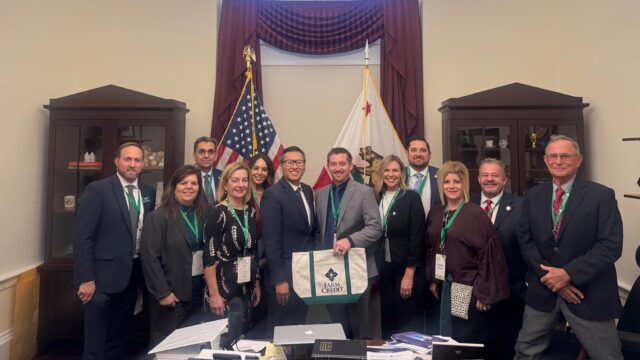
“Just 6% of the nation’s 435 Representatives and 100 Senators have a strong connection to agriculture, which is why Farm Credit brings farmers and Farm Credit executives to Washington, DC, every other year as part of the Farm Credit Fly-In,” said Kevin Ralph, AgWest Farm Credit’s California President.
“Because so few members have a strong connection to agriculture, we have to go the extra mile to help them understand what Farm Country is like.”
California-based representatives from AgWest, American AgCredit, CoBank, Colusa-Glenn Farm Credit, Fresno Madera Farm Credit and Golden State Farm Credit were among the 800 people from around the country who journeyed to the Capitol in late 2025 to meet with Congressional members and staff. The organizations are part of the nationwide Farm Credit System – the largest provider of credit to U.S. agriculture.
The messages are two-fold, Ralph said.
“Every day, Farm Credit works to fulfill its mission to be a reliable source of funding for the agricultural community. Having our customers there to tell members and their staff what it’s like harvesting wine grapes right now is important – members can learn what farmers are facing and how they can help,” he said.
The second focus is on legislation specific to Farm Credit.
“It’s important for us to advocate for our California farmer and rancher customers on the importance of a new Farm Bill,” said Jacob DeBoer, a senior regional marketing manager for American AgCredit’s California Valley region. “It gives farmers and ranchers certainty and provides a safety net from unpredictable events, such as droughts, market crashes and input cost spikes.”
DeBoer said several key fiscal measures important to Farm Credit’s success were included in H.R. 1, the comprehensive budget reconciliation bill enacted in 2025, but other important issues are still pending.
“We still need reauthorization of the Farm Bill’s 12 titles,” said Marc Busalacchi, American AgCredit’s executive business manager of strategic initiatives. “We need updates to things like reference prices, ARC and PLC structure and dairy margin coverage reforms. Californians would also really like to see specialty crop and horticulture provisions, which were not included in H.R. 1.
“We also focused on issues that affect Farm Credit’s ability to better fulfill its mission,” Busalacchi added. “The Farm Credit System was created by an act of Congress in 1916, and often legislative changes are needed to allow it to keep up with changing conditions. It’s important that we make our needs known to Congress.”
For example, a top priority for Fly-In participants was to gain support for legislation to allow Farm Credit to provide home loans in additional rural communities.
Since 1971, the Farm Credit System has been allowed to provide loans to purchase non-farm homes in rural communities of 2,500 or less. Because some rural towns have gradually grown in population over the years, the proposed bill would allow these loans to be made in communities of up to 10,000 people. This would make up to an additional 1.8 million rural Californians eligible.
Busalacchi said this small change would be a game-changer for many rural residents.
“Besides the fact that many rural bank branches have closed over the years, making these communities lending deserts, rural home loans are most often non-conventional and may not be appealing to traditional lenders that want to sell loans on the secondary market since many rural home loans can’t be sold that way,” Busalacchi said.
“Because Farm Credit specializes in non-conforming loans in these communities, it would allow more rural families to become homeowners and help stabilize rural towns.”
Farm Credit’s other priorities include increasing limits on direct and guaranteed loans by the Farm Service Agency, clarifying Farm Credit’s lending authority to invest in essential community facilities such as rural health clinics and allowing fishing-related businesses to borrow from Farm Credit in the same way as farm-related companies.
During the Fly-In, California Farm Credit officials and customers met with Reps. Jared Huffman, D-San Rafael; Vince Fong, R-Bakersfield; Jim Costa, D-Fresno; David Valadao, R-Hanford; Rep. Mike Thompson, D-St. Helena; and the late Rep. Doug LaMalfa, R-Richvale.
After a successful day on Capitol Hill sharing customer stories and advocating for legislation, Farm Credit welcomed lawmakers and staff to the Fly-In Marketplace Reception, which showcased Farm Credit customers and their products from across the country.
###
About Farm Credit:
AgWest Farm Credit, American AgCredit, CoBank, Colusa-Glenn Farm Credit, Fresno Madera Farm Credit, Golden State Farm Credit and Yosemite Farm Credit are cooperatively owned lending institutions providing agriculture and rural communities with a dependable source of credit. For more than 100 years, the Farm Credit System has specialized in financing farmers, ranchers, farmer-owned cooperatives, rural utilities and agribusinesses. Farm Credit offers a broad range of loan products and financial services, including long-term real estate loans, operating lines of credit, equipment and facility loans, cash management and appraisal and leasing services…everything a “growing” business needs. For more information, visit www.farmcreditalliance.com