






Backed for years by Farm Credit, the Livestock Memorial Research Fund provides seed money that helps researchers move critical vaccines from lab to pasture
The Livestock Memorial Research Fund, an arm of the California Cattlemen’s Association, is on a roll.
Since its establishment in the 1980s, members of the livestock community have raised hundreds of thousands of dollars to promote scientific and educational projects to benefit the industry, while also providing scholarships for graduate students in ag-related fields.
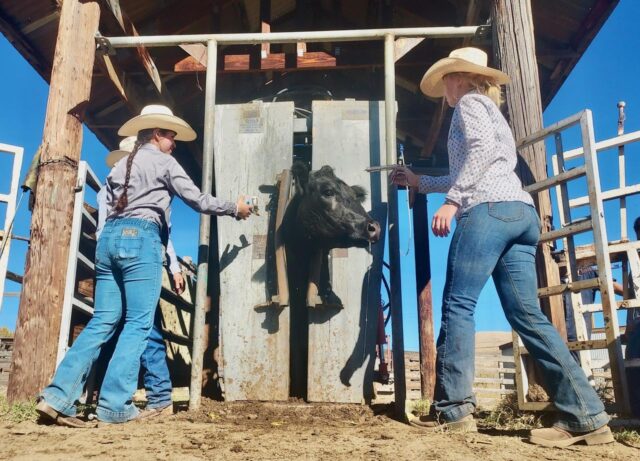
Their signature projects have included working to develop three important vaccines to address serious problems cattlemen encounter. The first one was approved for use in late 2020, the second is showing great promise with hopes of being approved within a couple of years and a third effort is now underway, said Research Fund committee member Tom Talbot.
These grants have been crucial seed money to help researchers attract larger grants from state and federal sources.
“Researchers can show them, look – California ranchers are excited about this, support the project and it’s important to the industry,” said Talbot, a rancher and veterinarian in Bishop.
Talbot said the Research Fund has built up an endowment over the years to fund research and scholarships but also relies heavily on the sale of raffle tickets at the Cattlemen’s Association annual convention. The prize is a stock trailer that for more than 15 years has been purchased with donations by California Farm Credit associations.
Ag West Farm Credit California President Kevin Ralph said Farm Credit has been proud to sponsor the prize each year, and to see the Research Fund’s investments pay off.
“The vaccines already on the market or in the development stage will prove to be incredibly valuable for California ranchers and save them collectively millions of dollars a year,” Ralph said. “Farm Credit is proud to have played this ongoing role in the Research Fund’s successes.”
Farm Credit associations supporting the Research Fund are AgWest Farm Credit, American AgCredit and CoBank. These organizations are part of the nationwide Farm Credit System – the largest provider of credit to U.S. agriculture.
The first vaccine was developed to prevent a dangerous ailment called epizootic bovine abortion, a tick-borne disease that for decades had caused tens of thousands of cows in the West to abort their calves.
“That was truly a home run for the industry,” said Talbot, a rancher and veterinarian in Bishop. “The efficacy of the vaccine has just been outstanding.”
While detailed statistics are not available, Talbot said the vaccine has caused the loss rate of calves to drop from between 10% and 40% in tick-infested areas down to the 5%-10% range today.
The Research Fund contributed nearly $350,000 to the research over several years.
For the past several years, the Research Fund’s has been supporting efforts to create a vaccine against another major tick-borne illness called bovine anaplasmosis. This disease, caused by bacteria that infects the red blood cells of cattle, leads to anemia, weight loss and even deaths that cost U.S. ranchers hundreds of millions of dollars in economic losses each year.
The work involved genetically modifying the pathogen in a lab. By deleting a specific gene and then injecting the modified pathogen into cattle, the animals were immunized. Talbot is hopeful that the vaccine could hit the market within a couple of years, which he said would be a significant development for California ranchers.
The Research Fund is now providing seed money for studies into developing a third vaccine, this one to prevent pinkeye – another common livestock disease. The bacteria-caused disease, largely spread by flies, costs producers nationwide over $150 million a year due to reduced weight gain (as much as 20-35 pounds per calf), along with lower milk production and sale value.
2026 marks the third year the Research Fund has contributed to this vaccine research.
“We have high hopes for it as we move forward and the funding has helped allow him to recruit additional funds to support research for the beef cattle industry,” he said.
Talbot said the Research Fund has contributed about $50,000 to each of these two projects.
Besides helping fund vaccine projects, the Research Fund also has awarded over $150,000 in graduate-level scholarships for students in fields that would benefit cattle production
Pierce Mallery, Director of Regional Banking with American AgCredit, said Farm Credit financially supports several ag-related scholarship programs each year because highly educated professionals must be trained to provide people with the skills and services the industry will continue to need.
“The Research Fund is investing wisely in developing the lawyers, veterinarians and other skilled professionals the industry will need to meet the challenges of tomorrow,” Mallery said. “Farm Credit strongly supports programs to train people to help ensure that agriculture continues to thrive in California”.
###
About Farm Credit:
AgWest Farm Credit, American AgCredit and CoBank are cooperatively owned lending institutions providing agriculture and rural communities with a dependable source of credit. For more than 100 years, the Farm Credit System has specialized in financing farmers, ranchers, farmer-owned cooperatives, rural utilities and agribusinesses. Farm Credit offers a broad range of loan products and financial services, including long-term real estate loans, operating lines of credit, equipment and facility loans, cash management and appraisal and leasing services…everything a “growing” business needs. For more information, visit www.farmcreditalliance.com
About the Livestock Memorial Research Fund:
The Livestock Memorial Research Fund is a 501(c)3 organization that funds scientific and educational projects and scholarships for students in fields related to California’s livestock industry. LMRF monies are used solely for scientific, charitable or educational purposes and are administered by a board consisting of California Cattlemen’s Association (CCA) members. Other uses of LMRF funds include studies by University of California researchers which identify grazing management strategies that improve riparian resource conditions. Other studies funded in part by LMRF contributions have researched the effects of livestock grazing upon endangered species and sought methods to control livestock disease.